

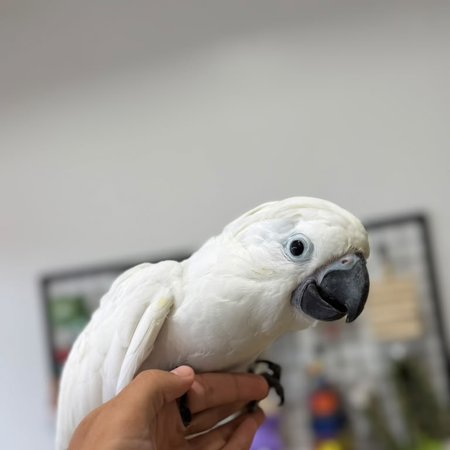
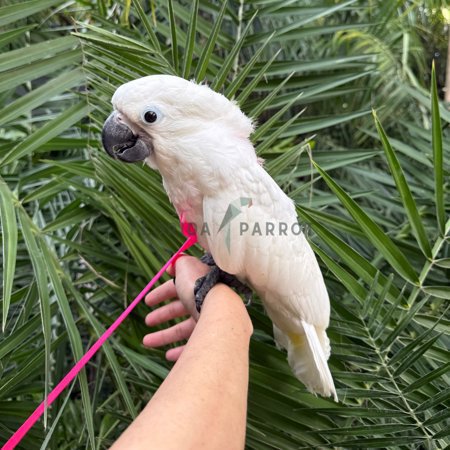
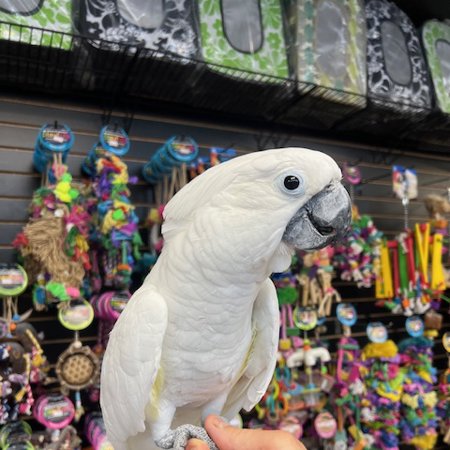
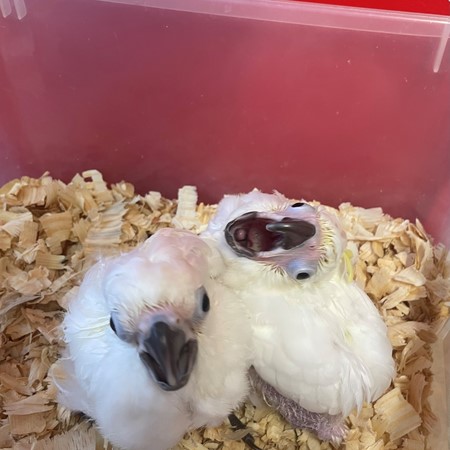
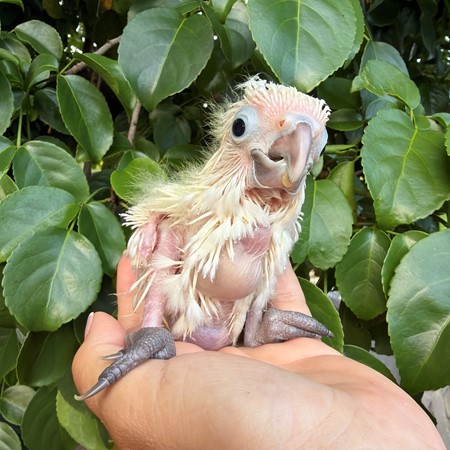
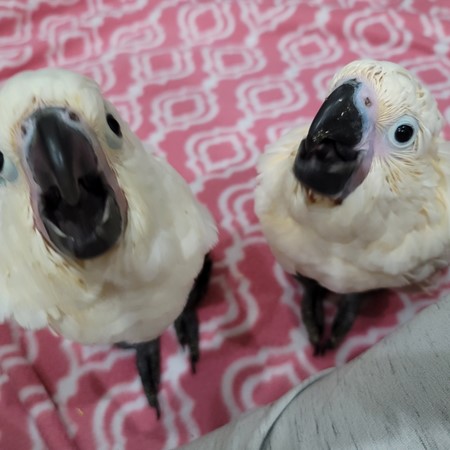


There is no honest way to write about the Umbrella Cockatoo without starting here: more Umbrellas are given up by their owners than almost any other large parrot. They are not difficult because they are badly tempered. They are difficult because they are extraordinarily affectionate, and the same need that makes a hand-raised Umbrella want to be against you all day is the need that produces the screaming and the plucking when it cannot be.
The bond is the problem and the appeal
An Umbrella will cuddle like no other parrot. People meet one and fall for it in an afternoon. What follows, often within a year, is a bird that screams whenever its person leaves the room, because being left is the one thing it cannot handle. Owners who do well with them deliberately teach independence from the first week - time on a stand, time in another room, time occupied alone - and they do it while the bird is young and the attachment is still forming.
The noise
An Umbrella scream is one of the loudest sounds any companion animal makes and it carries through walls and across gardens. This is not a flat bird, it is not a shared-wall bird, and in many neighbourhoods it is not a bird you can keep without a conversation first. Nothing trains it away.
Powder down
Cockatoos produce fine white powder constantly. It settles on everything in the room, it gets into electronics, and for anybody in the house with asthma or a dust allergy it is a genuine health question rather than a cleaning one. Air filtration and frequent bathing help. Nothing removes it.
Plucking
Feather destruction is common in this species and it is usually boredom, loneliness or hormones rather than disease - though a vet should rule disease out first. A plucked Umbrella is a bird telling you something about its day. It is far easier to prevent with enrichment and routine than to reverse once it has become a habit.
Forty to seventy years
Buy an Umbrella at thirty and you are making a decision for the rest of your life. Arrange where the bird goes afterwards, in writing, and tell the person. Breeders who have been doing this for decades will bring it up themselves.
So who should have one
Somebody at home a great deal, in a house where the noise will not cost them their neighbours, with no dust sensitivity in the family, who wants a bird to be involved in the day rather than to admire from across a room - and who is willing to spend the first year teaching the bird to be alone. That is a real description of a real household, and there are plenty of them.
And what they are like when it works
Nothing else is like a well kept Umbrella. They are funny, physically affectionate, startlingly intelligent, and they read a room better than most people do. They dance, they clown, they learn the household's habits and join in with them. The owners who get this right do not describe it as hard work. They describe it as the best bird they ever had, and they say so for forty years.
Buying one
Ask the breeder what they do to teach independence, and listen carefully to the answer - it is the single most useful question you can ask about this species. Ask when the bird weaned, ask about disease testing, and be straight with them about your household, because a good cockatoo breeder would rather not sell you one than see it come back. The breeders listed on this page raise Umbrella Cockatoos and can be contacted directly through the site.