

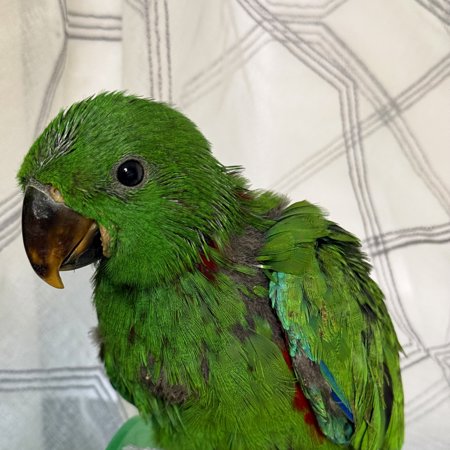
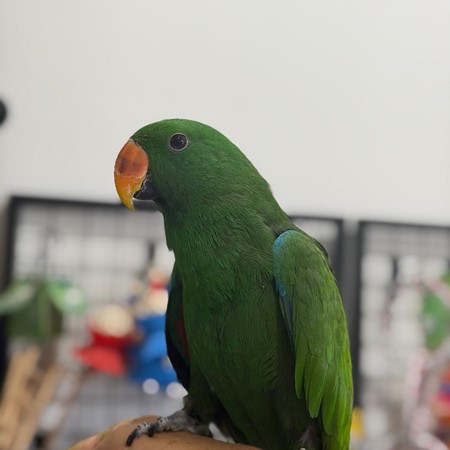
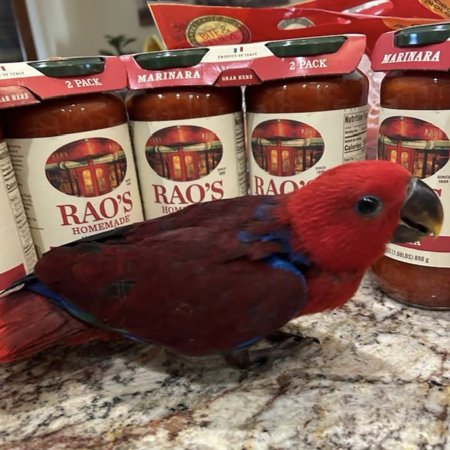

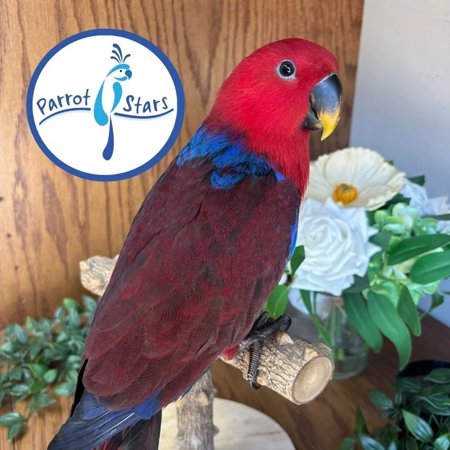
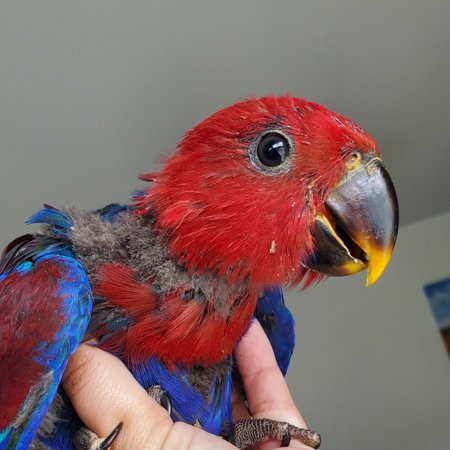
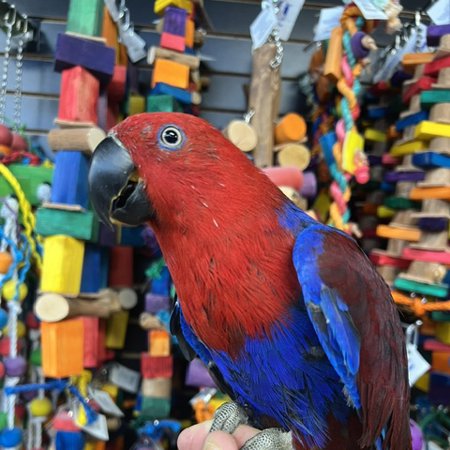
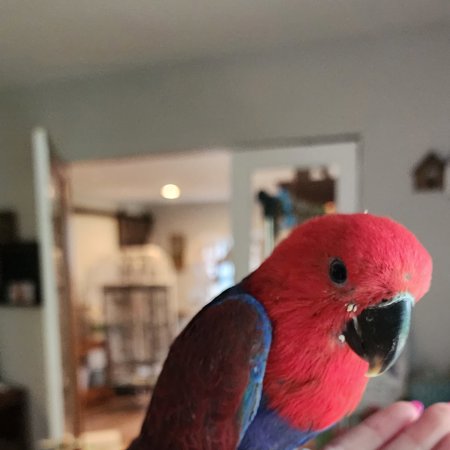
Eclectus are the odd ones out among parrots, and the first surprise is that the cock and the hen look like different species: he is brilliant green with an orange beak, she is deep red and blue with a black one. For two hundred years they were catalogued separately. They are also among the calmest of the large parrots, which is the main reason people who keep them are so attached to them.
What they are like
Eclectus are watchful and surprisingly placid. They tend not to be the frantic, into-everything birds that conures and caiques are; a contented Eclectus will sit with you for long stretches and take things at its own pace. They are sensitive to atmosphere - raised voices and chaotic households unsettle them - and they do better in a calm home than a busy one. Hens are commonly described as the bolder and more territorial of the two sexes, particularly around a nest box.
Feathers, and why they look like that
Eclectus feathers have an unusual hair-like quality close up, which is normal and not a sign of poor condition. What is not normal is bare patches, chewed flights, or plucking, which in this species usually means stress, boredom or diet rather than illness.
Diet, and a debate worth knowing about
Eclectus have a longer digestive tract than most parrots and are usually kept on a diet weighted more heavily towards fresh food - vegetables, fruit and greens - than you would feed a Grey or a Macaw.
Many experienced Eclectus keepers go further and avoid heavily vitamin-fortified pellets and added supplements, on the view that this species absorbs more from its food and that excess synthetic vitamins cause the twitching and wing-flipping sometimes seen in the breed. This is widely believed among Eclectus people and it is not settled - the evidence is largely anecdotal and other causes are proposed for the same symptoms. Treat it as a live argument rather than a fact.
What holds either way: find out exactly what the bird is eating before you collect it and keep it on that. An Eclectus is a species where changing the diet abruptly is a bad idea, and where an owner quietly adding supplements "to be safe" is doing something the breeder may strongly disagree with. Ask, and keep asking after the sale.
Talking
They are good, and better than their quiet reputation suggests. Many Eclectus develop clear speech with a large vocabulary, and some are startling mimics of household sounds and voices.
The noise
Quieter than a macaw or a Sun Conure day to day, but they have a loud, honking alarm call, and a bored or frustrated one can repeat it. They are a reasonable choice for a house, a poor one for a flat with thin walls.
Living with one
Expect thirty years or more. They need a large cage, several hours out, fresh food prepared daily rather than a bowl of dry pellets, and quiet company rather than constant stimulation.
Why people are so loyal to them
Eclectus keepers tend to be Eclectus keepers for life. The calm is the reason: a settled Eclectus is a genuinely restful bird to share a room with, affectionate without being frantic, and beautiful in a way photographs do not really carry. For somebody who wants a large parrot but not a whirlwind, there is nothing else quite like one.
Buying one
Ask what the bird eats, in detail, and write it down. Ask at what age it was weaned. The sexes are obvious by colour from a young age, so you will know what you are getting - but ask whether the breeder has kept the parents together and how the chick was raised, because hand-raised and parent-raised Eclectus can behave quite differently.
The breeders listed on this page raise Solomon Island Eclectus and can be contacted directly through the site. Their prices, and what the species has sold for over the years, are shown above.