

The Indian Ringneck is a long-tailed, elegant parakeet with a talking ability that rivals birds several times its price. They are clever, a little aloof compared with a conure, and striking to look at. They are also the species most often described as having turned on its owner overnight, which is worth understanding before you buy rather than after.
What they are like
Ringnecks are observant, independent birds. A well-socialised one is confident and will happily sit with you, but they are less naturally cuddly than a conure or a cockatiel and they do not forgive rough handling. They reward consistency. Handled every day, a Ringneck stays tame for life; handled only when convenient, one becomes a bird you look at rather than a bird you keep.
Bluffing
This is the part worth being blunt about. Keepers very commonly report that somewhere between about four months and a year a previously sweet Ringneck becomes nippy, lunges, and refuses to step up. It is usually called bluffing, and the general experience is that it passes within a few months provided handling continues calmly through it.
Not everyone accepts bluffing as a distinct stage - some keepers put the same behaviour down to hormones, or to handling that slipped - but the advice that follows is the same either way: keep going, calmly, and do not take it personally.
What it is not is a bird that has gone bad. The number of adolescent Ringnecks rehomed by owners who thought they had been sold a vicious animal is the single biggest avoidable problem in the species. If you buy a young Ringneck, expect this, and plan to work through it.
Talking
Ringnecks are genuinely good talkers, with a clear voice and often a large vocabulary, and many start earlier than a Grey would. They are one of the best value talking parrots there is. As always, no individual bird is guaranteed to say anything.
Rings, and telling cocks from hens
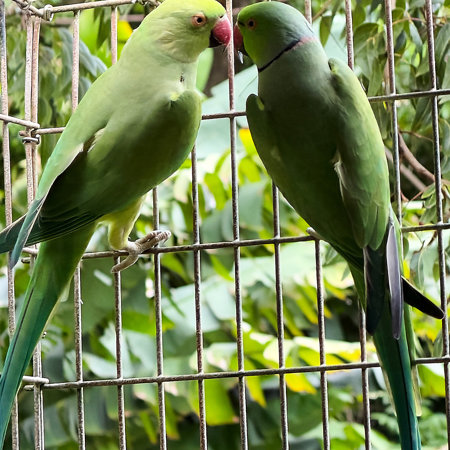
The black and rose ring that gives the bird its name is grown by cocks, and usually not until the second or third year. A young bird of either sex looks like a hen. If sex matters to you, ask the breeder whether the bird has been DNA sexed rather than relying on appearance - plenty of people have bought a hen and found a ring appearing two years later.
Colour
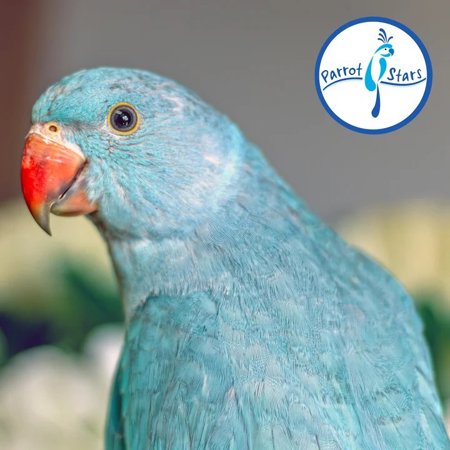
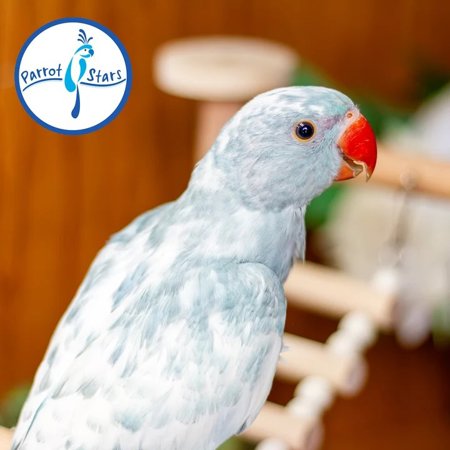
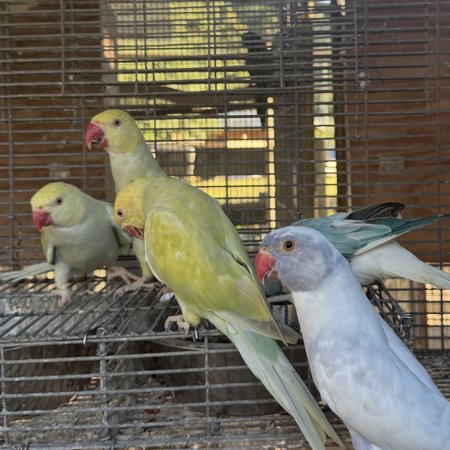
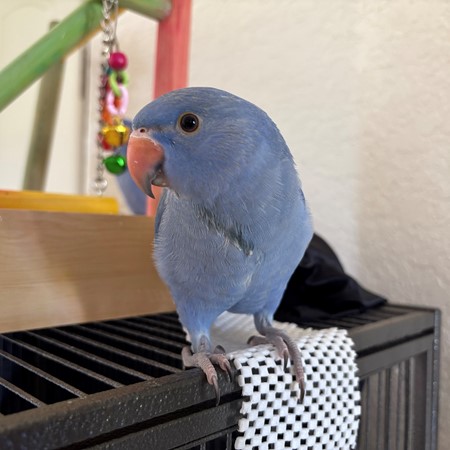
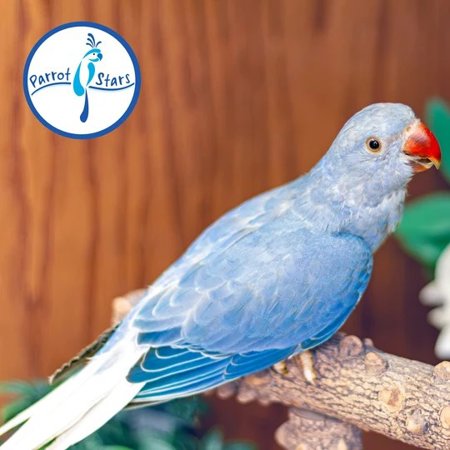
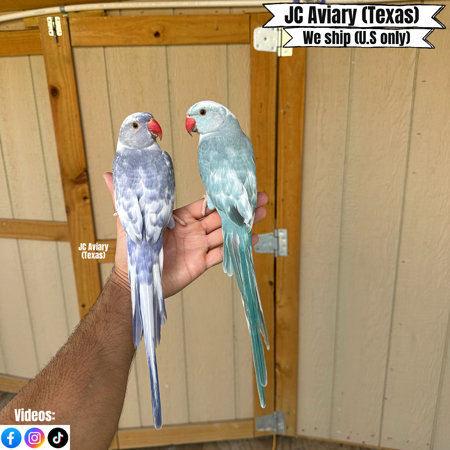
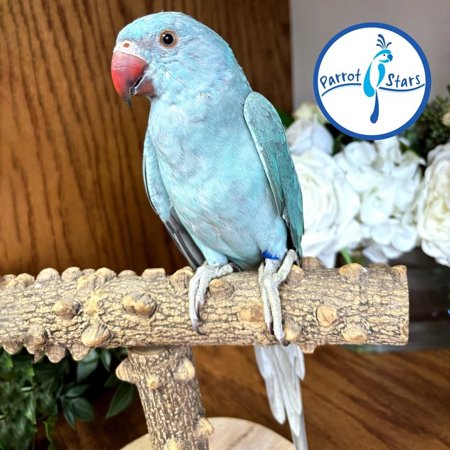
Ringnecks come in many mutations - blue, lutino, albino, cinnamon, grey and combinations. These are colour variations of the same bird. A blue Ringneck is not a calmer or friendlier one, it is a Ringneck that is blue.
Living with one
Expect twenty-five to thirty years. The tail needs more room than people expect: a cage that suits a conure will have a Ringneck damaging its tail feathers against the bars. Go wider and longer than seems necessary. They need several hours out daily, a pelleted diet with fresh vegetables, and things to chew. Their call is a loud ringing screech used in bursts rather than continuously - louder than a Quaker, not as relentless as a Sun Conure.
Buying one
Ask how old the bird is and whether it has been through the bluffing stage yet, because a tame six-month-old and a tame two-year-old are different propositions. Ask whether it was DNA sexed. Ask to see somebody other than the breeder handle it.
The breeders listed on this page raise Indian Ringnecks and can be contacted directly through the site. Their prices, and what the species has sold for over the years, are shown above.