

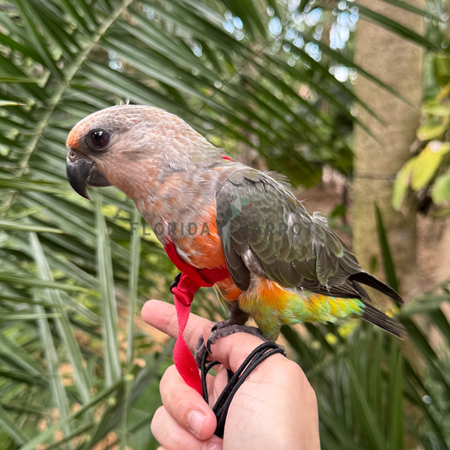
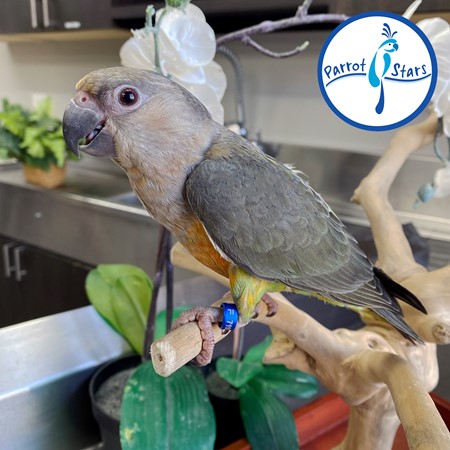
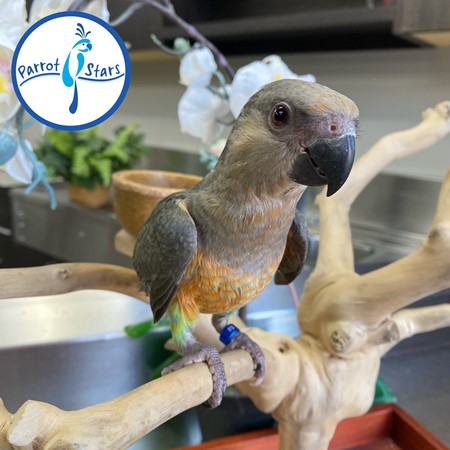

The Red-belly is the extrovert of the Poicephalus. Where a Meyer's watches and a Senegal picks a person, a Red-belly works the room - active, acrobatic, vocal in a chatty rather than a piercing way, and the best talker of the group by some margin. For a flat-sized parrot with a real personality, this is one of the strongest options there is.
Cocks and hens look different
Unusually for a parrot, you can tell by looking: cocks have the orange-red belly the name refers to, hens have a green belly with orange only at the edges. Juveniles are harder. Keepers generally say cocks talk more and hens are slightly steadier, though individual birds vary more than the sexes do. It is worth knowing so that nobody pays for a cock and receives a hen.
Talking
Good for the size. A clear small voice, a decent vocabulary, and the Poicephalus habit of using words in context. Not an Amazon, but somebody who wants speech in a bird that will not deafen them should look here before they look at anything larger.
Quiet, but busy
The volume is low - chatter, whistles, a sharp alarm call. The activity is not. Red-bellies are restless birds that hang upside down, raid anything left on a table, and need a genuine amount out of the cage. A Red-belly with nothing to do finds something, and you will not like what it finds.
Adolescence
Nippy between about six months and two years, like the rest of the genus. Keep handling through it.
Weight
Prone to obesity and fatty liver on seed. Pelleted base, vegetables, seed and sunflower as treats only.
Living with one
Twenty-five to thirty years. Foraging toys rather than a cage full of plastic, and something new regularly - this is a bird that gets bored before it gets lonely.
Buying one
Ask the sex and ask how they know. Ask how many people have handled it. Ask when it weaned and about disease testing. Fewer breeders raise Red-bellies than raise Senegals, so be prepared to wait for the right one. The breeders listed on this page raise Red-bellied Parrots and can be contacted directly through the site.