

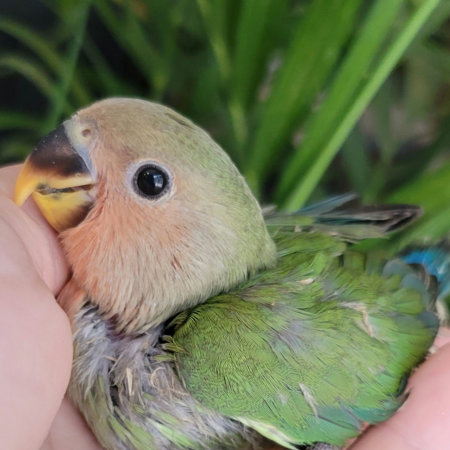
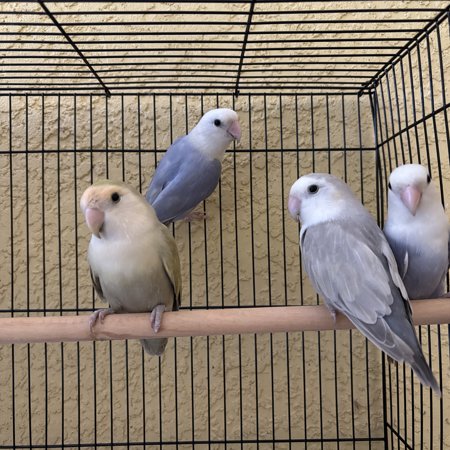


The Peach-face is the lovebird most people mean when they say lovebird, and the name causes more disappointment than any other in the hobby. Buyers take it to mean a bird that loves people, and buy two so the bird will not be lonely. What they get is a bonded pair entirely absorbed in each other, and a household nobody in the cage is interested in.
One bird or two - decide before you buy
A single Peach-face, hand-raised and handled daily, becomes a genuinely tame and devoted little parrot that treats its person as its mate. Two Peach-faces bond to each other and will usually stay wild towards people no matter how much time you put in. Neither is wrong. A pair is an easier, happier bird to keep and a far less interactive one. But you cannot have both, and buying a companion for a tame single bird is the most common way people lose the tameness they had.
They bite
Lovebirds are confident out of all proportion to their size and they use their beaks. A Peach-face will see off a bird three times its weight, and it will take on a hand it dislikes. Hens in breeding condition are particularly sharp. This is manageable and normal rather than a fault, but a small bird is not automatically a gentle one and children should know that.
Loud for the size
A shrill, persistent chirping that carries further than the bird's size suggests, and a bonded pair will keep it up at each other all day. Most flats can take one lovebird. A pair in a small flat is harder than people expect.
The paper habit
Peach-faces shred paper into strips and tuck it into their rump feathers to carry it - a nesting behaviour no other lovebird does in quite the same way, and one of the genuinely delightful things about keeping them. Give them safe paper and they will entertain themselves for hours.
Colour
This species has been bred into more colour mutations than almost any other parrot, from the wild green through lutinos, pieds, violets and whitefaces. Colour has no bearing on temperament. Buy the bird, not the colour.
Living with one
Fifteen to twenty years, which surprises people who think of them as short-lived. A pelleted base with fresh vegetables, a cage with room to fly across, and daily handling if you want a tame bird. They are hardy and straightforward to keep well.
Buying one
Say plainly whether you want a tame single bird or a pair to watch, and let the breeder guide you - they will know which of their birds suits which. Ask whether it was hand-raised and how recently it was handled, because a hand-raised lovebird left in an aviary for a few months goes back to being a wild one. The breeders listed on this page raise Peach-face Lovebirds and can be contacted directly through the site.