

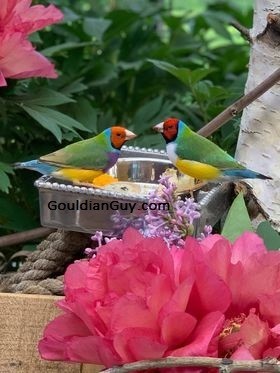
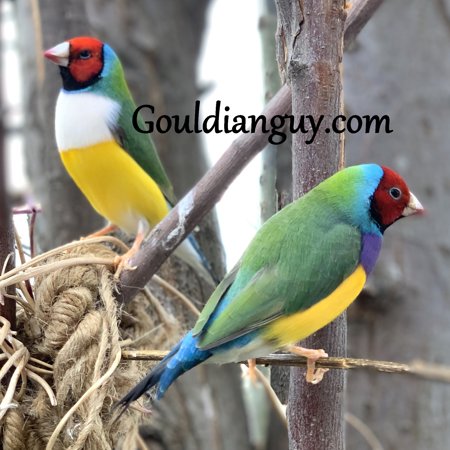
Lady Gouldian Finch

Chloebia gouldiae

Also known as Lady Gouldian Finch

2 Lady Gouldian Finches for sale now
With prices, photos and the breeders raising them.
See them
Photographed by the breeders who raised them, from listings on BirdBreeders.com. Birds still for sale link to their listing.
Lady Gouldian Finch at a glance
Lifespan
5-8 years
Adult size
5.0-6.0 in
Weight
14-20 g
Minimum cage
30in x 18in x 18in
Bar spacing
3/8 in or less
Noise
Quiet
Talking
Rarely talks
Dander
Low
Experience
For experienced keepers
Origin
The tropical savannah of northern Australia
Diet
A finch seed mix with egg food, fresh greens, cuttlebone and grit, and live food while rearing. More delicate than their looks suggest - they dislike draughts and cold.
Typical figures for the species, gathered from avian references. Individual birds vary.

The Lady Gouldian is the most beautiful finch kept anywhere, and that is exactly why so many of them die in their first year with a new owner. They are bought on sight, usually as somebody's first finch, and they are not a first finch. Given the right conditions they are no harder than anything else in an aviary - but the right conditions are specific, and nobody tells you at the point of sale.

They are not a beginner finch

Gouldians come from tropical northern Australia and they do not tolerate cold or draughts. They need a steady warm room, out of the path of a door or a window, and they do badly in an unheated garage or a conservatory that swings with the weather. Keepers who lose them usually lose them in the first cold snap.

Air sac mite

This is the one to know about. Air sac mite is common in Gouldians and shows as clicking, wheezing, open-mouthed breathing or a bird that tires quickly, and it kills if it is left. It is treatable, and many breeders treat routinely as a matter of course. Ask any seller directly whether their birds are treated for it and how often. A breeder who answers straight away is one who has been keeping them a while.

The moult is hard on them

Gouldians moult heavily, often for a couple of months, and they need proper nutrition through it - a good finch mix, egg food, greens, cuttlebone and grit. A bird that goes into a moult underfed is the bird that does not come out of it.

Breeding is a separate undertaking

Gouldians are famously poor parents in captivity, and for decades the usual answer was to foster the eggs under Society Finches. Many breeders now raise them without fostering, and keepers hold strong and opposing views about which approach produces better birds. If you intend to breed, this is worth asking about before you buy - a line raised by its own parents and a line raised under societies are not the same stock.

Housing and company

A long flight rather than a tall cage, because they fly across. They are peaceful and do well in a mixed finch aviary, and they are happier in a small group than alone. They are not handled - this is a bird to watch, and a dozen of them in a planted flight is a remarkable thing to have in a house.

Colour

The head colour - black, red or yellow - is genetic and does not change with age or diet, though juveniles are drab green and only colour up after their first moult, which catches out buyers who expect a brightly coloured young bird. Breast and back colour mutations are widely available.

Buying one

Gouldians on this site come from a notably small number of breeders producing a notably large number of birds, which tells you something useful: the people raising them are specialists, and they are worth listening to. Ask about mite treatment, ask what temperature the birds have been kept at, and ask whether the parents raised them. The breeders listed on this page raise Lady Gouldian Finches and can be contacted directly through the site.

Common questions

How much does a Lady Gouldian Finch cost?

Most Lady Gouldian Finches listed on BirdBreeders.com in the last twelve months were priced between $239 and $239, with a midpoint around $239. That is drawn from 24 real listings by breeders on this site over that period, not an estimate. Price varies with age, hand-feeding, DNA sexing and the breeder's location.

How long do Lady Gouldian Finches live?

Lady Gouldian Finches typically live 5-8 years in good conditions. That is a long commitment for any household, and worth planning for before buying rather than after.

How loud are Lady Gouldian Finches?

Quiet. Noise is the most common reason parrots are rehomed, so it is worth being honest with yourself about your home, your neighbours and the hours you keep before choosing a species.

Do Lady Gouldian Finches talk?

Rarely talks. No individual bird can be promised to speak, whatever the species is known for, so buy for the company rather than the conversation.

How big do Lady Gouldian Finches get?

An adult is roughly 5.0-6.0 in from head to tail, weighing around 14-20 g.

What size cage does a Lady Gouldian Finch need?

A minimum of 30in x 18in x 18in, and wider matters more than taller - birds fly across rather than up. Bar spacing should be 3/8 in or less. Treat any minimum as a floor rather than a target.

What do Lady Gouldian Finches eat?

A finch seed mix with egg food, fresh greens, cuttlebone and grit, and live food while rearing. More delicate than their looks suggest - they dislike draughts and cold.

Are Lady Gouldian Finches good for a first-time owner?

For experienced keepers. Ask any breeder directly what they think of the match - a breeder who talks you out of a species is worth more than one who does not.

Do Lady Gouldian Finches produce a lot of dust?

Low. It matters more than most people expect for anyone with asthma, and it is worth raising with a doctor before buying rather than afterwards.

Where do Lady Gouldian Finches come from?

The tropical savannah of northern Australia. Birds offered here are captive bred.


Prices, what the species has sold for over the years, and ratings from breeders who raise them are on the listings page.
Lady Gouldian Finch listings
Not sure this is the right bird?
Six questions on room, noise, dust and how long a commitment you are making.
Which bird suits you?