

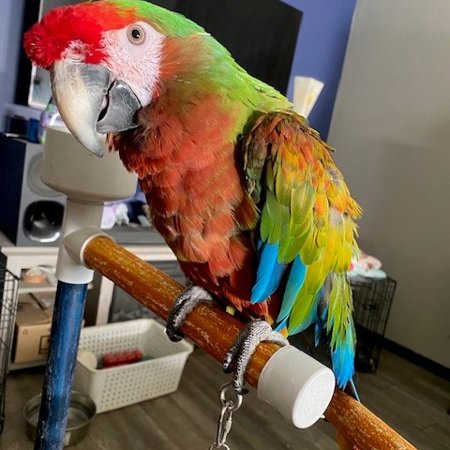
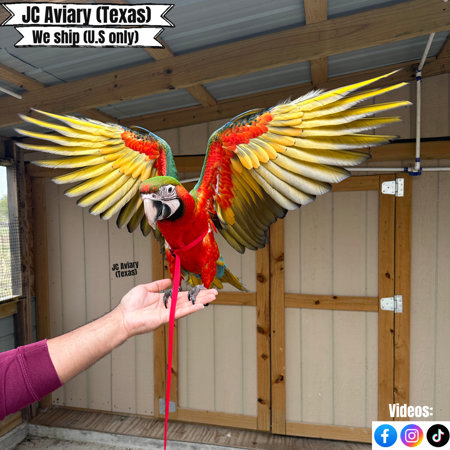
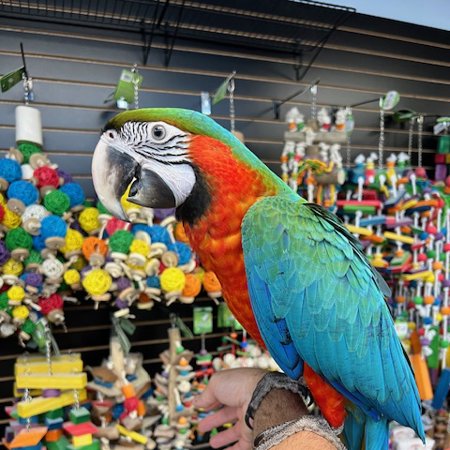

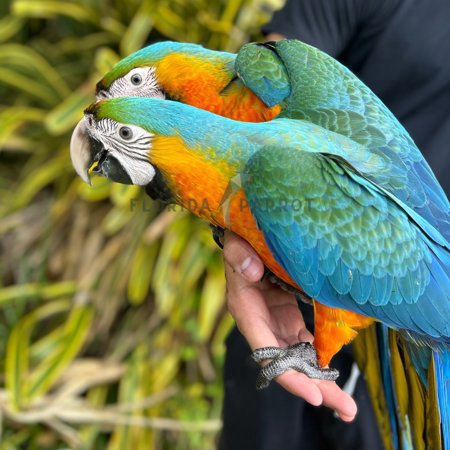
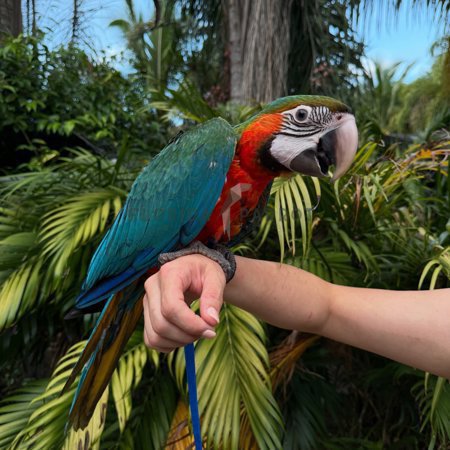
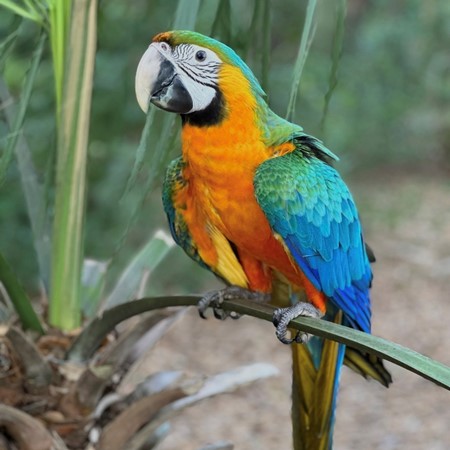

A hybrid macaw is a cross between two macaw species. Catalina, Harlequin, Camelot, Shamrock, Miligold and others are all crosses rather than species, and many are strikingly coloured - which is why they are bred and why people want them.
Why they have their own listing here
Because otherwise they end up filed as something they are not. Hybrids were being listed under Scarlet Macaw or Blue and Gold with the cross mentioned only in the description, which is no use at all to somebody searching for a Scarlet. Listing them separately means a buyer looking for a pure species finds one, and a buyer who wants a Harlequin can find that too. If you are shown a bird described as one species but discussed as a cross, ask directly which it is.
It is a contested thing to breed
You should know this is argued about, because you will meet both views. Against: macaw species are declining in the wild, hybrids cannot contribute to any conservation programme, and a hybrid bred on from again produces birds whose parentage nobody can reliably trace. For: these are captive-bred pets generations removed from the wild, no wild population is affected by them, and a hybrid is as good a companion as either parent.
Both positions are held by serious people. What matters for a buyer is simply that you know what you are getting, and that whoever sells it to you says so plainly.
What they are like
This is the practical catch with hybrids: temperament is less predictable than with a species. A Catalina is a Scarlet crossed with a Blue and Gold, and it can lean either way - the easy-going bulk of the Blue and Gold or the sharper, more demanding streak of the Scarlet. Breeders who raise a particular cross regularly will tell you which tendencies they see. Ask, and ask about the parents specifically rather than the cross in general.
Size and noise
These are big birds and they are loud. A macaw's call is not a shriek you get used to - it carries for a long way outdoors and through walls indoors, and it is a normal thing for a healthy bird to do several times a day. They need a cage most people underestimate, a beak that can destroy furniture has to be given something else to destroy, and a bite is a genuine injury rather than a nip. Macaws are not apartment birds.
Living with one
Expect fifty years, often more. That is a bird that will likely outlive the arrangement you make for it, so make one. They need hours of interaction, serious enrichment, a pelleted base diet with vegetables and nuts, and space. A macaw that is under-stimulated becomes loud and destructive, and a macaw being loud is a different order of problem from a conure being loud.
If it is the right house for one
There is a reason people who keep macaws keep macaws. They are affectionate on a scale that surprises people, physically playful, and comic in a way that does not wear off. A well-raised hybrid in a home with the space and the hours for it is as good a bird as any of its parent species - the warnings above are about the size of the commitment, not the quality of the animal.
Buying one
Ask what the cross is and what both parents were. Ask whether the bird is DNA sexed. Ask at what age it was weaned, and never accept an unweaned macaw - hand-feeding one is not a beginner job. Ask to see it handled by somebody other than the breeder.
The breeders listed on this page raise hybrid macaws and can be contacted directly through the site. Their prices, and what these birds have sold for over the years, are shown above.