

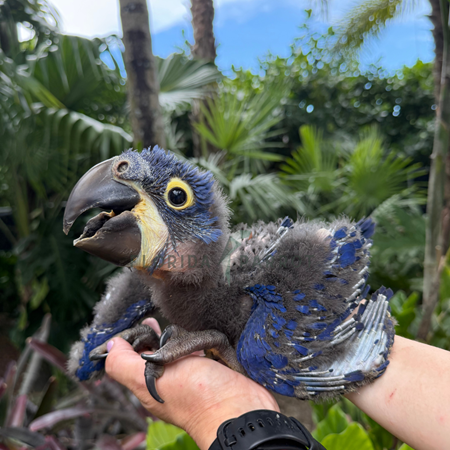
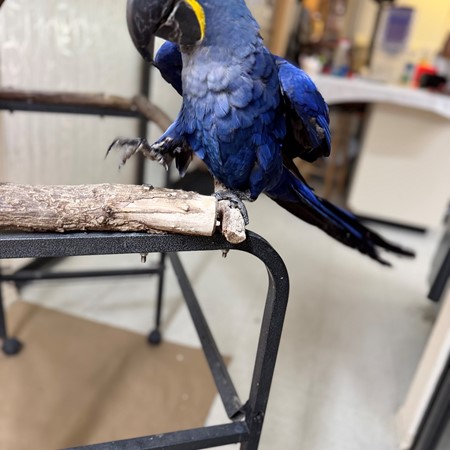
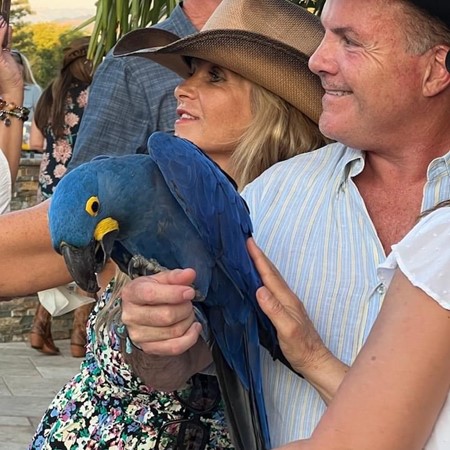
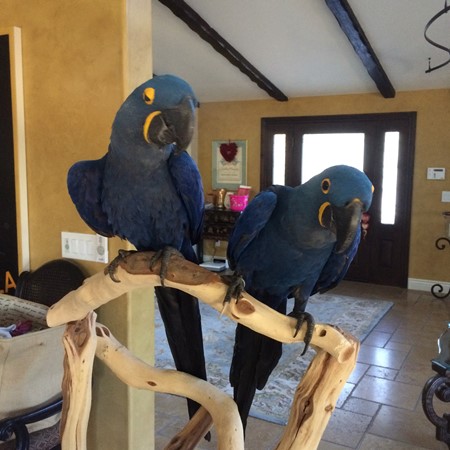
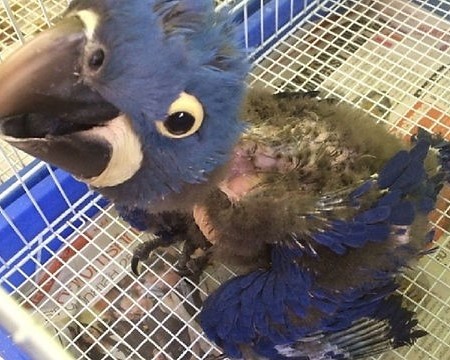
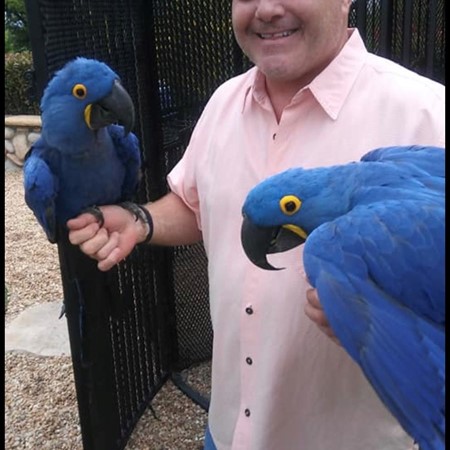
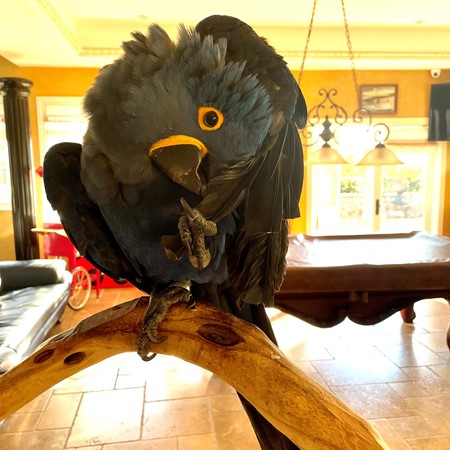
The Hyacinth is the largest parrot in the world and, by most accounts of the people who keep them, the gentlest of the giants. It is also the most expensive bird in common aviculture, it is protected, and almost nothing you have read about keeping macaws applies to it without modification.
The diet is different and this is the part people get wrong
Hyacinths evolved eating palm nuts and they need a far higher fat intake than any other parrot kept. The standard advice for macaws - a pelleted base with nuts as occasional treats - will slowly starve a Hyacinth of what it needs. They are typically fed a substantial daily quantity of nuts, macadamia and palm nut among them, alongside everything else. Get this from your breeder and from an avian vet who has treated the species, not from general macaw guidance.
The beak
The most powerful bite of any bird. A Hyacinth can crack a macadamia shell as though it were nothing, and the cage, the perches and the toys all have to be built for that. Ordinary macaw cages do not hold them. This is also the reason a Hyacinth and a small child should never be unsupervised, regardless of how gentle the bird is - and they usually are gentle.
Space
A wingspan over four feet. Most homes genuinely cannot house one properly, and the honest version of this article says so rather than suggesting a bigger cage. People who keep Hyacinths well usually give them an aviary or a dedicated room.
Paperwork
Protected species, sold with documentation. Ask the breeder exactly what comes with the bird, get it in writing before money changes hands, and keep it for the life of the bird. The rules vary by jurisdiction and change - check rather than relying on any web page.
Noise
Loud, though keepers often describe the call as less piercing than a Scarlet or a Blue and Gold - deeper and more of a roar than a shriek. It still carries a long way.
Fifty to sixty years
A Hyacinth bought today will outlive most buyers, and at this value the arrangement for what happens afterwards should be written down properly rather than agreed over a kitchen table.
Why people do it anyway
Because keepers describe them as the most tolerant, most affectionate and most people-oriented of the big macaws - a bird that will lie on its back in your arms despite being able to break a broom handle. They are extraordinary animals and the people who have them rarely talk about anything else.
Buying one
Ask what the bird is fed, in detail, and compare the answer with what an avian vet tells you. Ask for the documentation before you pay. Ask when it weaned and about disease testing, and expect a serious breeder to interview you as hard as you interview them. The breeders listed on this page raise Hyacinth Macaws and can be contacted directly through the site.