



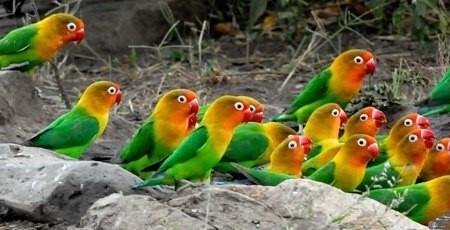
Fischer's Lovebirds are small, vivid, extremely busy parrots - orange face, green body, white eye ring - with far more character than their size suggests. They are among the most colourful birds you can keep without taking on something large, and among the most misunderstood.
One bird or two
You will be told that a lovebird kept alone will pine and die. Keepers who work with them generally say this is wrong, and that the truth is simpler: a single hand-raised lovebird given daily attention bonds strongly to people, while a bonded pair bonds to each other and is usually much less interested in you.
So the question is not whether it is cruel to keep one. It is what you want. A pet that sits on you means a single bird and real daily time. An aviary pair is a lovely thing to watch and will largely ignore you. Buying two because somebody said you had to, and then wondering why neither is tame, is the common mistake.
Temper
Lovebirds have a reputation among keepers for being scrappy well beyond their size, and hens especially are often described as territorial - with other lovebirds, with other species, and sometimes with a hand entering the cage. Mixing them into a mixed aviary is widely advised against. As ever this varies by bird, but it is reported often enough to plan around.
The noise
Loud for something this small. Lovebirds have a high, insistent chirp they keep up for long stretches, and a pair will do it at each other all day. Most keepers describe it as more wearing than a cockatiel and less piercing than a conure. Worth sitting in a room with some before you commit.
Paper, and what hens do with it
Hens shred paper into strips and tuck it into their rump feathers to carry it - one of the more charming things any parrot does, and a strong hint that a bird is in a nesting mood. Give them safe paper to shred and it is good entertainment.
Talking
Rarely, and not clearly. Some learn a word or two. This is not the reason to keep one.
Living with one
Expect fifteen to twenty years. They need more cage than their size suggests because they are constantly active, a pelleted base with fresh vegetables, and a steady supply of things to shred. Sexing is not reliable by eye in this species, so ask about DNA sexing if it matters.
Why people who keep them keep only them
The small breeder base behind this species is telling: lovebirds attract people who get properly absorbed in them. They are brilliantly coloured, endlessly occupied, long-lived for their size, and a tame single bird is as engaging a companion as parrots several times the price.
Buying one
Say plainly whether you want a pet or an aviary pair, because the right bird is different. For a pet, ask whether it was hand-raised and how much it is handled now. Ask what it eats. Fischer's, Peach Face and Masked Lovebirds are different species, listed separately here, and hybrids between them are common - so ask what you are actually being offered.
The breeders listed on this page raise Fischer's Lovebirds and can be contacted directly through the site. Their prices, and what the species has sold for over the years, are shown above.