

If the only thing standing between you and a bird is noise, the Bourke's Parakeet is the answer and hardly anybody knows it. They are the quietest parrot kept in any numbers - a soft warbling call, no screech at all - and they are gentle, undemanding and entirely suitable for a flat, a shared building or a house with somebody who works nights.
What you are not getting
Honesty first. A Bourke's is not a hands-on parrot. They are aviary birds that can become tame enough to step up and sit with you, but they do not talk, they do not perform, and they will not follow you around the house. Somebody who wants a parrot to interact with should look at a Meyer's or a Pionus instead. Somebody who wants a beautiful, peaceful bird in the room will be delighted.
They are active at dawn and dusk
Bourke's are crepuscular - they come alive in low light, and they will be quietly busy early in the morning and again in the evening when other birds have settled. It is one of the more charming things about them and it catches out anybody who expected the cage to go quiet at sunset.
Housing
Length rather than height. They fly across rather than climb, and a long flight cage with clear space in the middle is what they want. They are peaceful enough to mix with finches and other small grass parakeets, and they are not destructive.
Colours
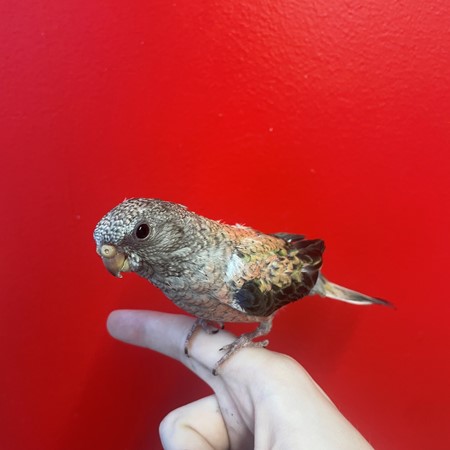
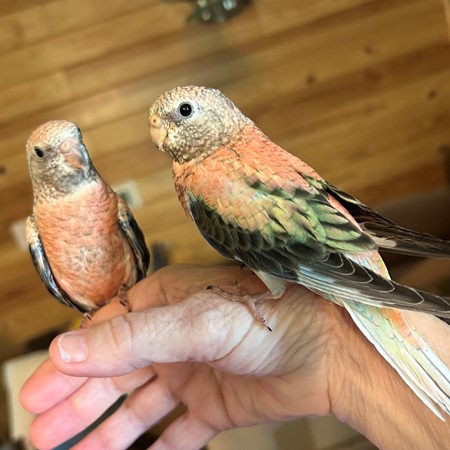
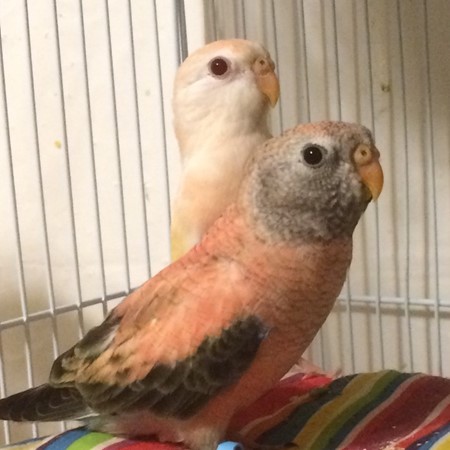
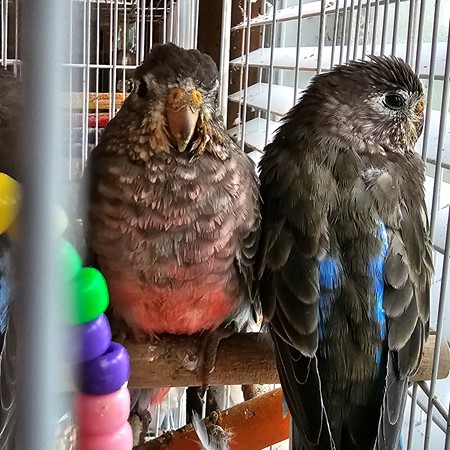
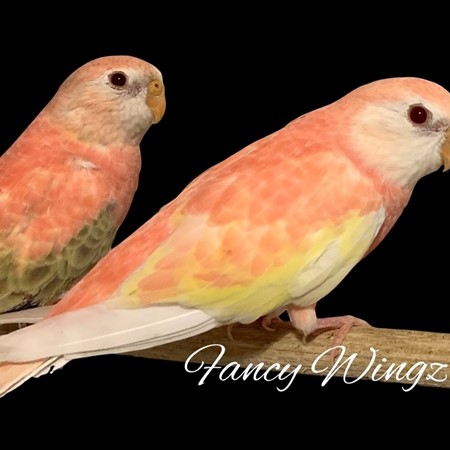
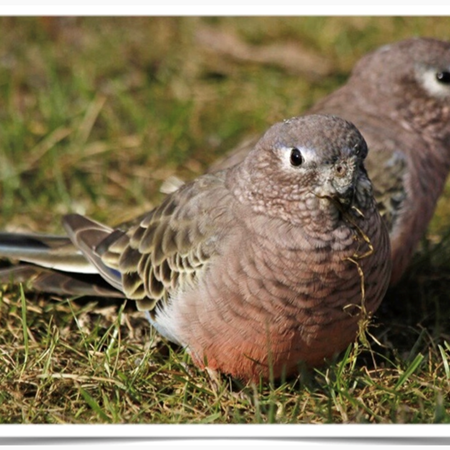
The wild bird is a soft dusty brown and pink. The rosy or opaline mutations are widely bred and are a striking pink throughout. Colour has no bearing on temperament.
Living with one
Ten to fifteen years. A good small-parakeet seed mix with pellets, fresh greens and cuttlebone. They are hardy, they are not prone to much, and they are among the least demanding birds in this catalogue to keep well.
Buying one
Ask whether the bird came from an aviary or was handled, which tells you how tame it will be. Ask how it has been housed. The breeders listed on this page raise Bourke's Parakeets and can be contacted directly through the site.