

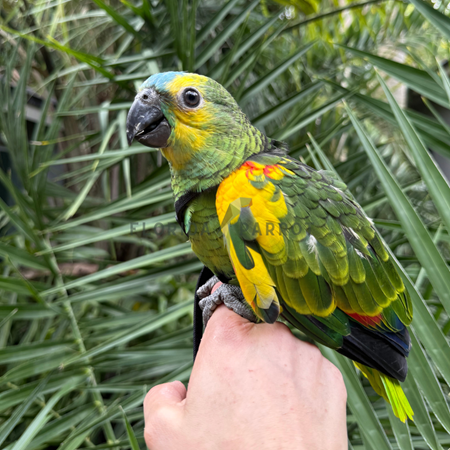





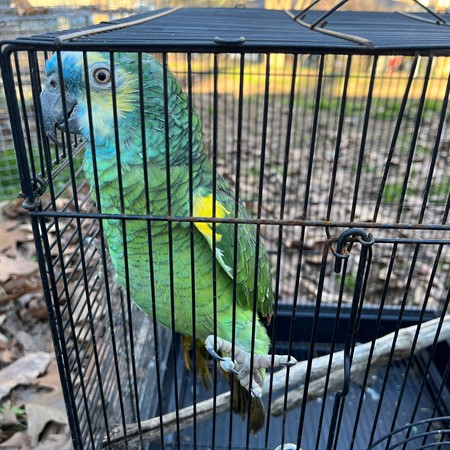
The Blue-front is the Amazon most people actually end up with: widely bred, widely available, and a genuinely good bird. It is also the species where keepers disagree most about what the species is like, and the reason is simple - Blue-fronts vary more from bird to bird than almost any parrot kept. Two of them raised the same way can turn out markedly different.
Buy the bird, not the species
This matters more here than the usual advice implies. One Blue-front will be a devoted, hands-on bird that talks constantly; the next will be self-contained, prefer to watch from a perch, and say very little. Both are normal. Any description of the species - including this one - will be wrong about some individuals, so spend time with the actual bird and weigh what you see more heavily than what you read.
Talking
Very good, and often started young. Not quite the clarity of a Yellow-nape, but a strong talker by any ordinary standard, with the Amazon habit of using words in the right place rather than at random.
Hormonal season
Blue-fronts come into breeding condition from around four to six years old and can become territorial and one-person about it for weeks at a time each year. Keepers generally find them less intense about it than the Yellow-nape or the Double Yellow Head, but it is the same cycle: twelve hours of dark sleep, no petting below the neck, handling away from the cage. It passes, and it comes back next year.
Noise
Loud, with the usual Amazon dawn and dusk calling. Towards the lower end for the family but nowhere near quiet.
Weight
Prone to obesity and fatty liver disease like all Amazons. Pelleted base, plenty of vegetables, nuts and seed as treats rather than food.
Fifty to sixty years
Plan for the bird to outlive you and write the arrangement down.
Why they are the sensible Amazon
Because availability is not nothing. Around eighty breeders have listed Blue-fronts here, which means you can wait for the right bird from the right person instead of taking the only one within driving distance. For a parrot you may keep for fifty years, being able to choose is worth more than any difference between Amazon species.
Buying one
Meet the bird more than once if you can, because the variation is real. Ask how the breeder handles hormonal season, ask when the bird weaned, and ask about disease testing. The breeders listed on this page raise Blue-front Amazons and can be contacted directly through the site.